Cloth & Cognition

NTJ – The Strategist

Dark Academia
A brooding, intellectual aesthetic inspired by old libraries and quiet ambition. Clean lines and muted tones dominate.
Look for: wool blazers, turtlenecks, tailored trousers, oxford shoes, structured coats.

Minimalist Noir
Sleek, intentional, and controlled — fashion without excess.
Look for: monochrome outfits, long black coats, crisp button-downs, leather boots.

INTP – The Thinker

Light Academia
Curious, gentle, and bookish with a softer edge than dark academia.
Look for: cream sweaters, pleated pants, loafers, linen shirts, tote bags.

Soft Grunge
Effortlessly messy and introspective, blending comfort with rebellion.
Look for: oversized hoodies, striped long sleeves, worn sneakers, beanies.

ENTJ – The Commander

Power Dressing
Bold, confident, and authoritative — clothing as leadership.
Look for: tailored suits, statement blazers, sharp heels or boots, structured handbags.

Modern Monochrome
Clean, dominant silhouettes with strong presence.
Look for: matching sets, wide-leg trousers, sleek belts, pointed shoes.

ENTP – The Visionary

Eclectic Vintage
Playful, bold, and unpredictable with personality in every layer.
Look for: patterned shirts, statement jackets, flared pants, colorful accessories.

Art School Core
Creative chaos with intentional mismatching.
Look for: graphic tees, layered textures, scarves, chunky rings.
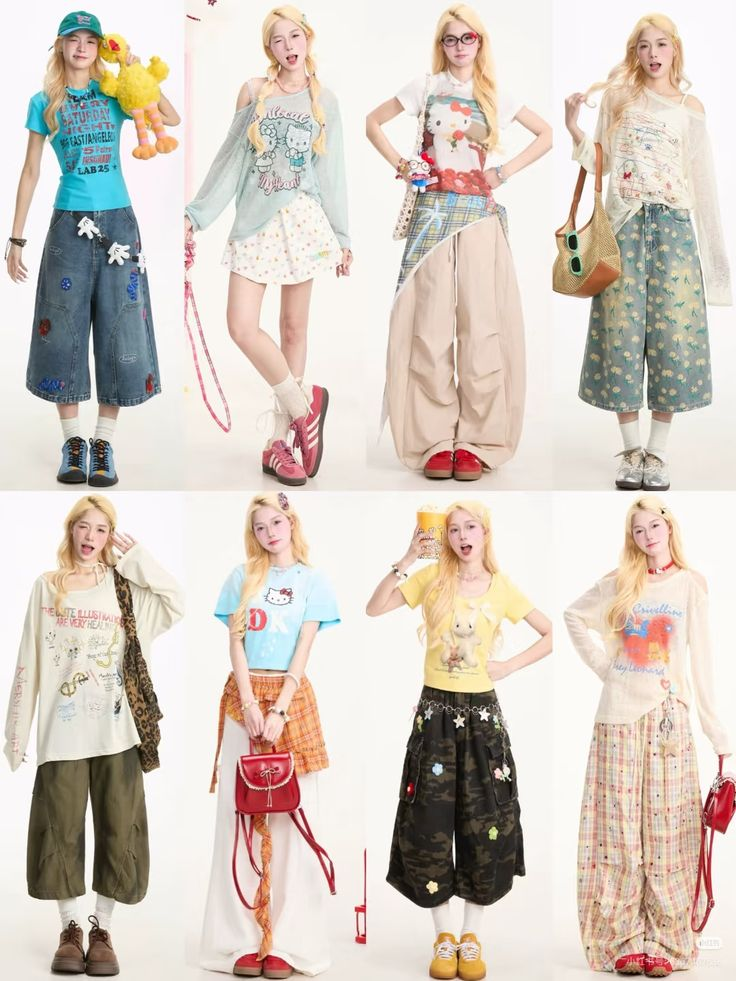
INFJ – The Advocate

Mystic Academia
Dreamy, symbolic, and deeply introspective with an intellectual edge.
Look for: flowing trousers, soft knits, long coats, moon or celestial jewelry.

Ethereal Minimalism
Quiet beauty with meaning behind every piece.
Look for: sheer layers, muted colors, delicate necklaces, soft silhouettes.
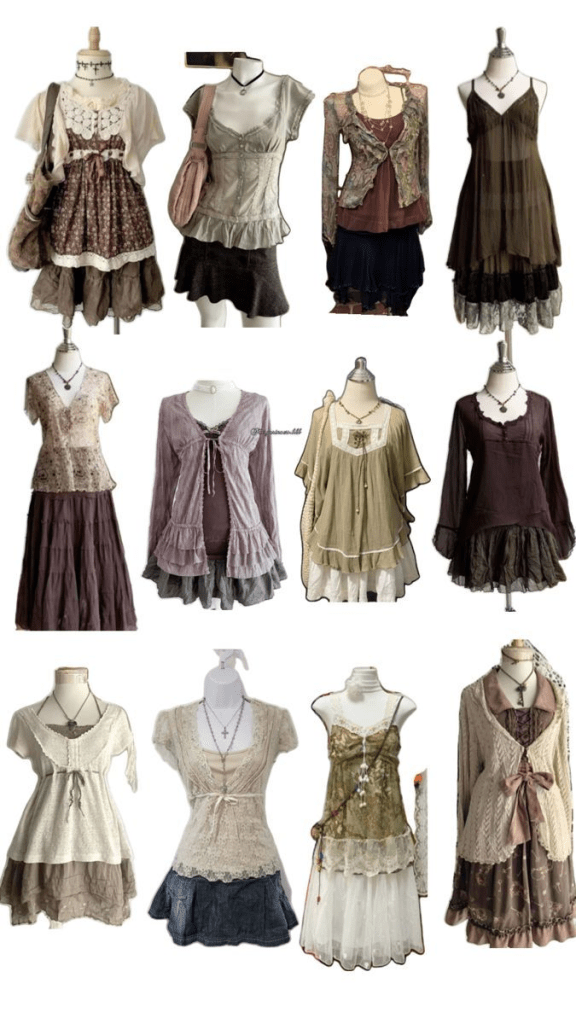
INFP – The Mediator

Cottagecore
Romantic, nature-inspired, and storybook soft.
Look for: flowy dresses, lace details, cardigans, Mary Janes, floral prints.

Whimsigoth
Fantasy meets emotion — dreamy but slightly dark.
Look for: velvet skirts, bell sleeves, lace tops, silver jewelry.
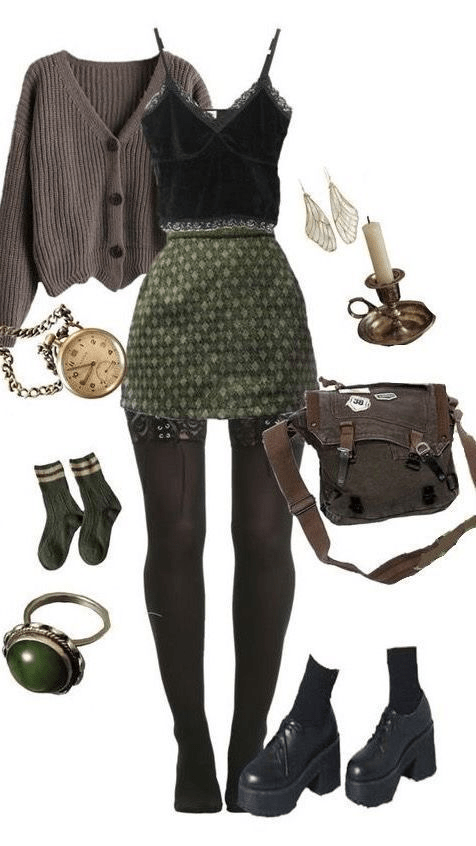
ENFJ – The Protagonist

Classic Elegance
Timeless, warm, and polished with social grace.
Look for: midi skirts, blouses, tailored coats, ballet flats.

Soft Power Chic
Approachable authority — leadership without intimidation.
Look for: neutral blazers, coordinated sets, minimal jewelry, clean lines.

ENFP – The Campaigner

Boho Revival
Free-spirited, colorful, and expressive.
Look for: flowy skirts, layered necklaces, fringe jackets, patterned scarves.

Indie Sleaze
Bold confidence with nostalgic edge.
Look for: leather jackets, band tees, mini skirts, statement boots.
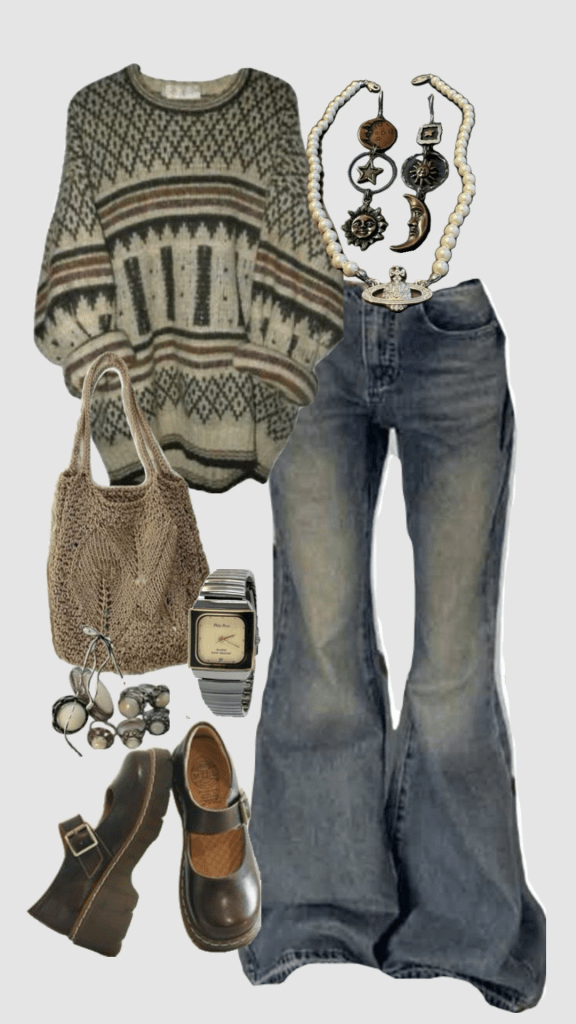
ISTJ – The Inspector

Classic Prep
Structured, practical, and timeless.
Look for: button-downs, loafers, cardigans, tailored slacks.

Heritage Core
Rooted in tradition and quality craftsmanship.
Look for: wool coats, tweed blazers, leather belts, neutral palettes.

ISFJ – The Protector

Soft Classic
Gentle structure with comforting elegance.
Look for: knit sweaters, pleated skirts, ballet flats, neutral tones.

Cozy Minimalism
Warm, practical, and quietly stylish.
Look for: cashmere sweaters, straight-leg jeans, ankle boots.

ESTJ – The Executive

Corporate Chic
Confident, efficient, and commanding.
Look for: pencil skirts, sharp blazers, pointed heels, structured bags.

Structured Utility
Function-first fashion with authority.
Look for: belted coats, clean trousers, sturdy boots.
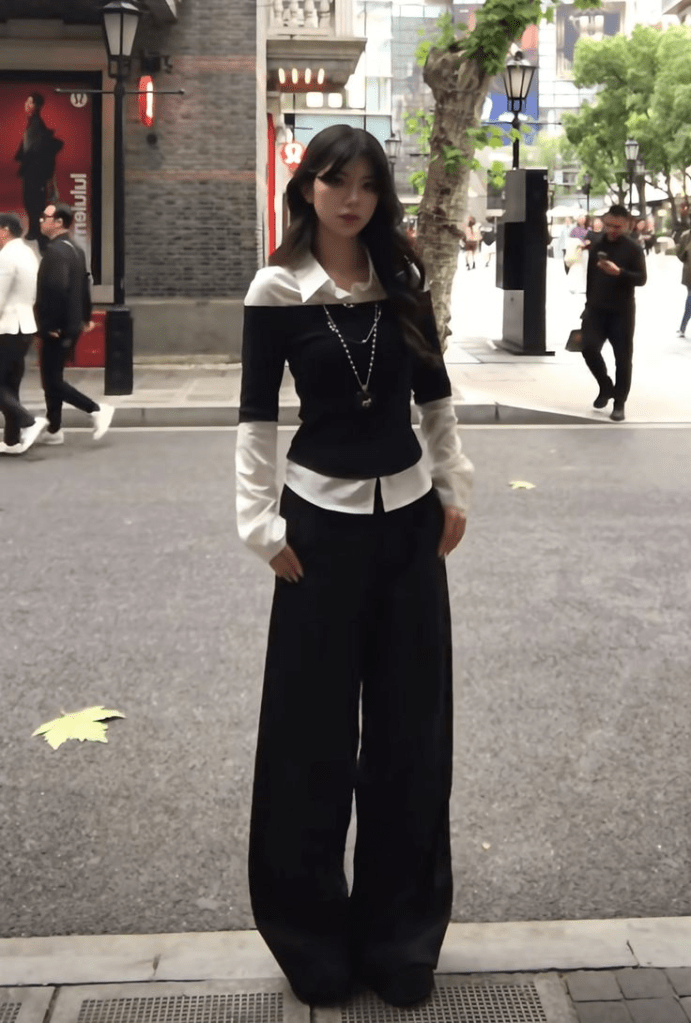
ESFJ – The Consul

Polished Casual
Put-together without trying too hard.
Look for: coordinated outfits, flattering silhouettes, classic accessories.

Warm Neutrals
Inviting, friendly, and refined.
Look for: beige knits, soft blouses, gold jewelry, midi dresses.
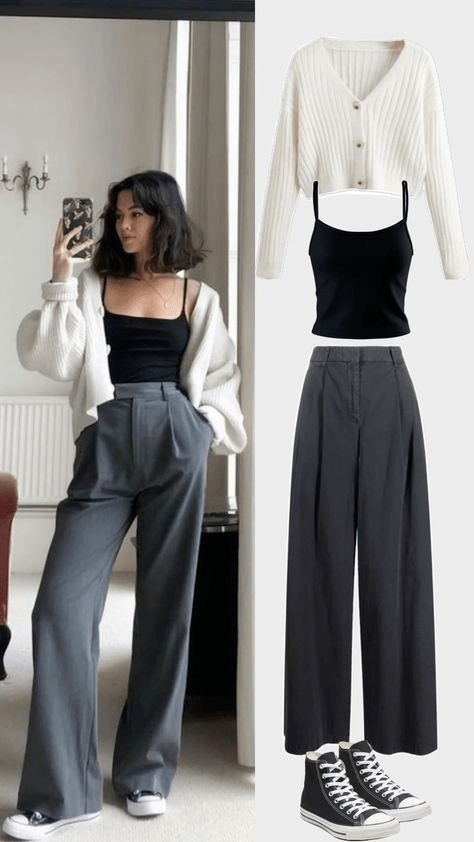
ISTP – The Virtuoso

Utility Core
Functional, edgy, and practical.
Look for: cargo pants, bomber jackets, boots, minimal accessories.

Urban Minimalism
No-nonsense style with a modern edge.
Look for: fitted tees, dark denim, leather jackets.
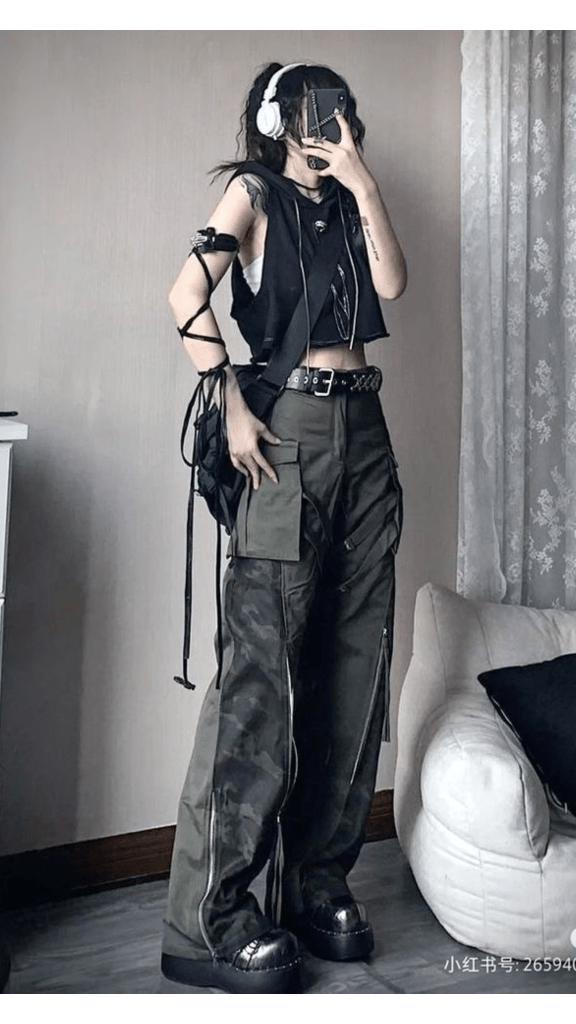
ISFP – The Adventurer

Art Hoe
Creative, expressive, and nature-inspired.
Look for: oversized sweaters, paint-splattered jeans, tote bags, doc martens.

Nature Goth
Earthy tones with dark romance.
Look for: layered knits, mossy greens, silver rings, leather boots.
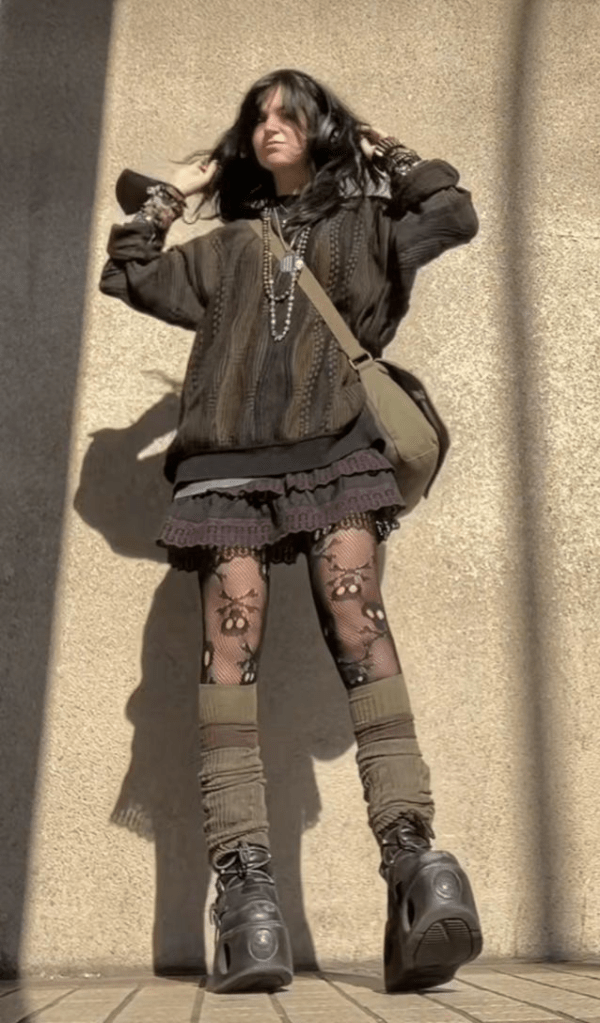
ESTP – The Dynamo

Streetwear Core
Confident, bold, and trend-driven.
Look for: oversized hoodies, sneakers, caps, graphic prints.

Y2K Revival
Flashy, playful, and attention-grabbing.
Look for: low-rise pants, baby tees, bold sunglasses.

ESFP – The Entertainer

Pop Glam
Fun, flashy, and expressive.
Look for: sequins, bold colors, statement heels, crop tops.

Festival Core
Carefree and eye-catching.
Look for: mesh tops, layered jewelry, playful prints.
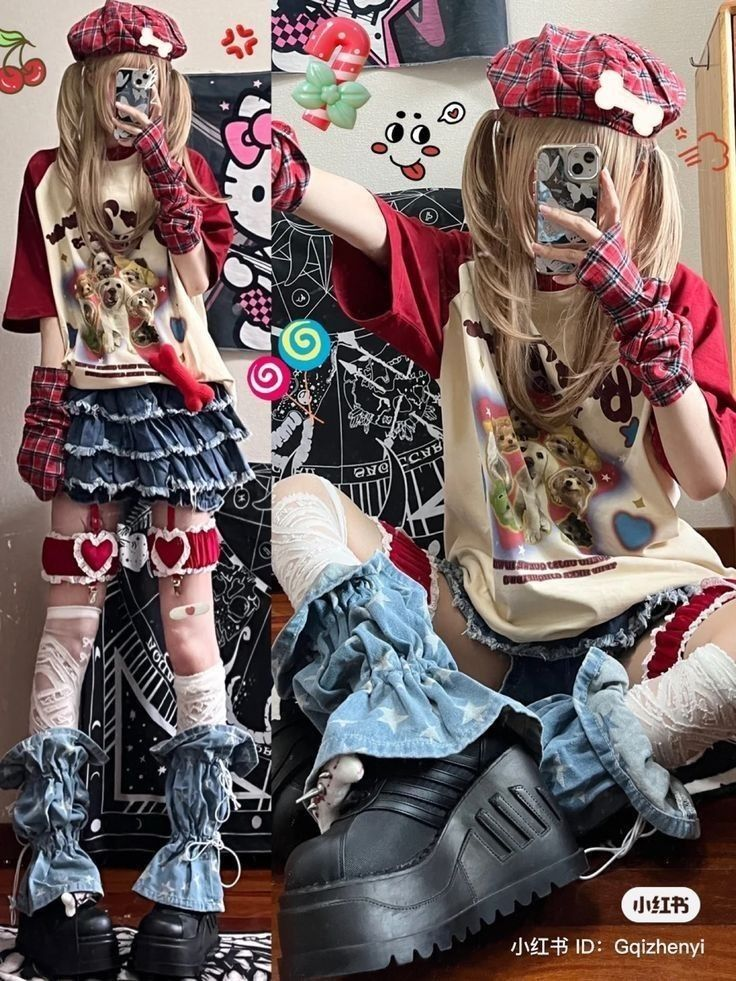
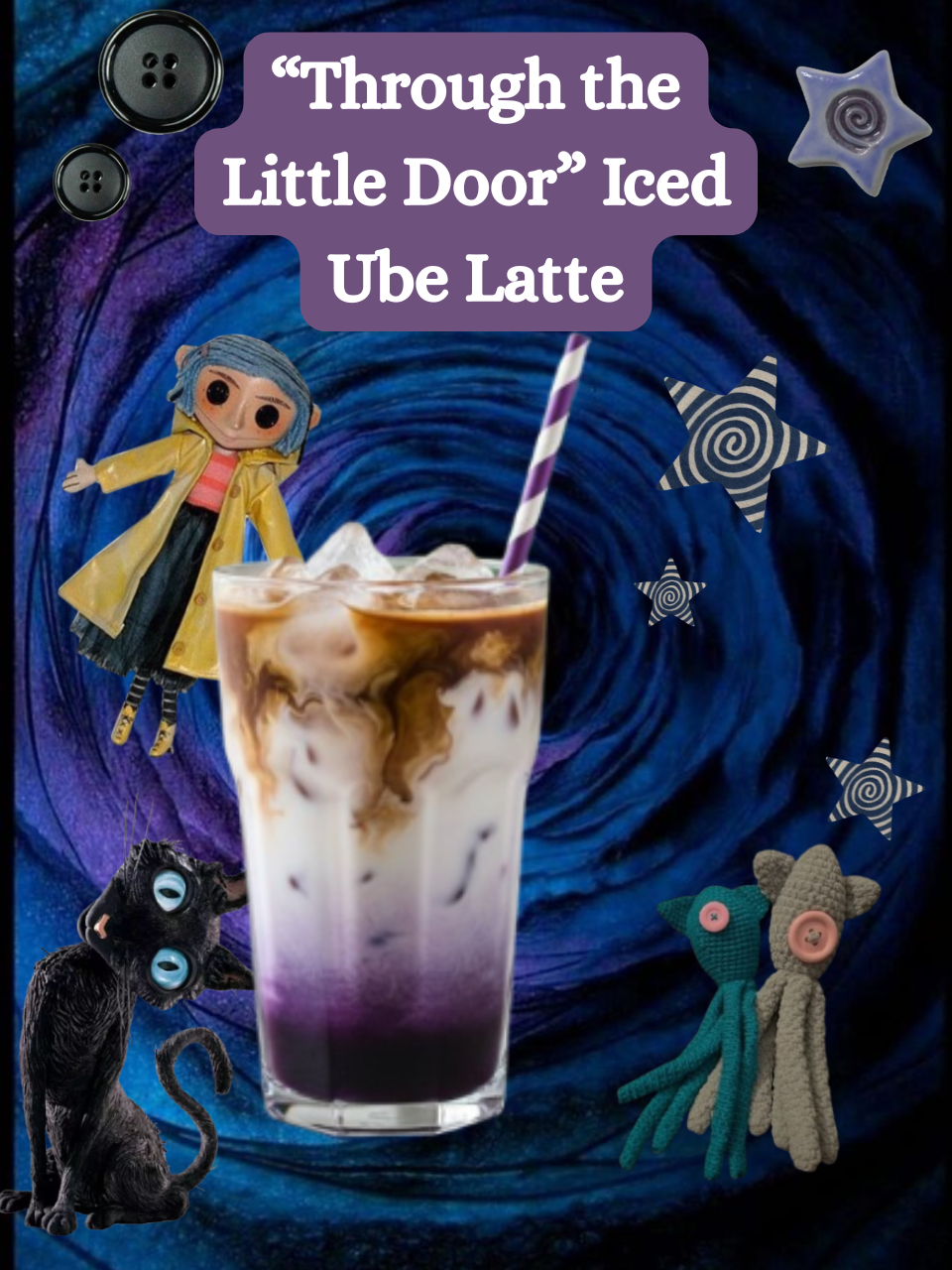
🪡🗝️ “Through the Little Door” Iced Ube Latte Recipe

Sweet, velvety, and just a little uncanny.

💜 Homemade Ube Syrup

(Makes ~1 cup)

Ingredients

  • ½ cup ube halaya (ube jam)
  • ½ cup water or milk (water = clearer purple, milk = creamier)
  • ½–¾ cup sugar (adjust to taste)
  • ½ tsp vanilla extract

Instructions

  1. In a small saucepan, whisk together ube halaya and liquid over low heat until smooth.
  2. Add sugar and continue stirring until fully dissolved and slightly thickened (5–7 minutes).
  3. Remove from heat and stir in vanilla.
  4. Let cool, then store in a sealed jar in the fridge for up to 2 weeks.

Tip: Strain through a fine mesh sieve for a smoother, café-style syrup.


🧊 Iced Ube Latte

Ingredients

  • Ice
  • ¾ cup milk of choice (oat, whole, or coconut are best)
  • 2–3 tbsp homemade ube syrup
  • 1–2 shots espresso or ½ cup strong cold brew

Optional “Other World” Cold Foam

  • ¼ cup heavy cream or coconut cream
  • 1 tsp ube syrup or vanilla syrup
  • Tiny pinch of activated charcoal (optional, for shadowy swirls)

🕯️ Instructions

  1. Add ube syrup to a glass and swirl it around the sides.
  2. Fill the glass with ice, then pour in milk.
  3. Slowly add espresso or cold brew to create layered contrast.
  4. Froth cold foam ingredients and spoon gently on top.
  5. Finish with edible shimmer, black sugar, or a chocolate button garnish.

🌙 Flavor Profile

Creamy • vanilla-sweet • slightly nutty • cozy but mysterious

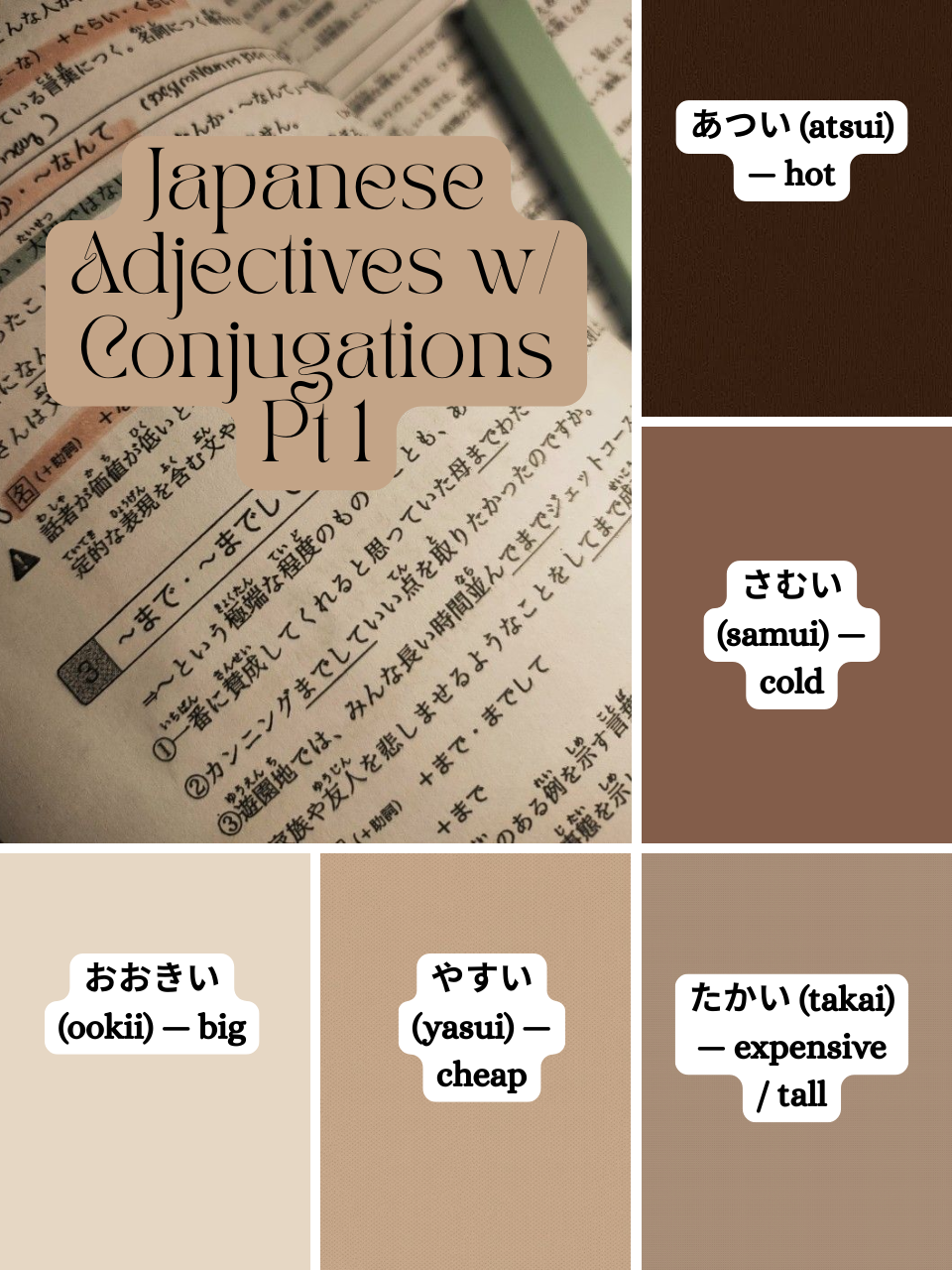
🥢50 Japanese Adjectives + Conjugations🍜

1. あつい — atsui

hot

  • あつい / atsui — hot
  • あつくない / atsukunai — not hot
  • あつかった / atsukatta — was hot
  • あつくなかった / atsukunakatta — was not hot

2. さむい — samui

cold

  • さむい / samui — cold
  • さむくない / samukunai — not cold
  • さむかった / samukatta — was cold
  • さむくなかった / samukunakatta — was not cold

3. たかい — takai

expensive / tall

  • たかい / takai — expensive
  • たかくない / takakunai — not expensive
  • たかかった / takakatta — was expensive
  • たかくなかった / takakunakatta — was not expensive

4. やすい — yasui

cheap

  • やすい / yasui — cheap
  • やすくない / yasukunai — not cheap
  • やすかった / yasukatta — was cheap
  • やすくなかった / yasukunakatta — was not cheap

5. おおきい — ookii

big

  • おおきい / ookii — big
  • おおきくない / ookikunai — not big
  • おおきかった / ookikatta — was big
  • おおきくなかった / ookikunakatta — was not big

6. ちいさい — chiisai

small

  • ちいさい / chiisai — small
  • ちいさくない / chiisakunai — not small
  • ちいさかった / chiisakatta — was small
  • ちいさくなかった / chiisakunakatta — was not small

7. はやい — hayai

fast / early

  • はやい / hayai — fast
  • はやくない / hayakunai — not fast
  • はやかった / hayakatta — was fast
  • はやくなかった / hayakunakatta — was not fast

8. おそい — osoi

slow / late

  • おそい / osoi — slow
  • おそくない / osokunai — not slow
  • おそかった / osokatta — was slow
  • おそくなかった / osokunakatta — was not slow

9. あかるい — akarui

bright / cheerful

  • あかるい / akarui — bright
  • あかるくない / akarukunai — not bright
  • あかるかった / akarukatta — was bright
  • あかるくなかった / akarukunakatta — was not bright

10. くらい — kurai

dark

  • くらい / kurai — dark
  • くらくない / kurakunai — not dark
  • くらかった / kurakatta — was dark
  • くらくなかった / kurakunakatta — was not dark

11. たのしい — tanoshii

fun

  • たのしい / tanoshii — fun
  • たのしくない / tanoshikunai — not fun
  • たのしかった / tanoshikatta — was fun
  • たのしくなかった / tanoshikunakatta — was not fun

12. むずかしい — muzukashii

difficult

  • むずかしい / muzukashii — difficult
  • むずかしくない / muzukashikunai — not difficult
  • むずかしかった / muzukashikatta — was difficult
  • むずかしくなかった / muzukashikunakatta — was not difficult

13. やさしい — yasashii

kind / easy

  • やさしい / yasashii — kind
  • やさしくない / yasashikunai — not kind
  • やさしかった / yasashikatta — was kind
  • やさしくなかった / yasashikunakatta — was not kind

14. うれしい — ureshii

happy

  • うれしい / ureshii — happy
  • うれしくない / ureshikunai — not happy
  • うれしかった / ureshikatta — was happy
  • うれしくなかった / ureshikunakatta — was not happy

15. かなしい — kanashii

sad

  • かなしい / kanashii — sad
  • かなしくない / kanashikunai — not sad
  • かなしかった / kanashikatta — was sad
  • かなしくなかった / kanashikunakatta — was not sad

16. おいしい — oishii

delicious

  • おいしい / oishii — delicious
  • おいしくない / oishikunai — not delicious
  • おいしかった / oishikatta — was delicious
  • おいしくなかった / oishikunakatta — was not delicious

17. まずい — mazui

bad-tasting

  • まずい / mazui — bad
  • まずくない / mazukunai — not bad
  • まずかった / mazukatta — was bad
  • まずくなかった / mazukunakatta — was not bad

18. あたらしい — atarashii

new

  • あたらしい / atarashii — new
  • あたらしくない / atarashikunai — not new
  • あたらしかった / atarashikatta — was new
  • あたらしくなかった / atarashikunakatta — was not new

19. ふるい — furui

old

  • ふるい / furui — old
  • ふるくない / furukunai — not old
  • ふるかった / furukatta — was old
  • ふるくなかった / furukunakatta — was not old

20. つよい — tsuyoi

strong

  • つよい / tsuyoi — strong
  • つよくない / tsuyokunai — not strong
  • つよかった / tsuyokatta — was strong
  • つよくなかった / tsuyokunakatta — was not strong

🌿 な-Adjectives (use だ / じゃない)


21. しずか — shizuka

quiet

  • しずかだ / shizuka da — quiet
  • しずかじゃない / shizuka janai — not quiet
  • しずかだった / shizuka datta — was quiet
  • しずかじゃなかった / shizuka janakatta — was not quiet

22. きれい — kirei

clean / pretty

  • きれいだ / kirei da — pretty
  • きれいじゃない / kirei janai — not pretty
  • きれいだった / kirei datta — was pretty
  • きれいじゃなかった / kirei janakatta — was not pretty

23. げんき — genki

healthy

  • げんきだ / genki da — healthy
  • げんきじゃない / genki janai — not healthy
  • げんきだった / genki datta — was healthy
  • げんきじゃなかった / genki janakatta — was not healthy

24. すき — suki

liked

  • すきだ / suki da — like
  • すきじゃない / suki janai — don’t like
  • すきだった / suki datta — liked
  • すきじゃなかった / suki janakatta — didn’t like

25. きらい — kirai

disliked

  • きらいだ / kirai da — dislike
  • きらいじゃない / kirai janai — don’t dislike
  • きらいだった / kirai datta — disliked
  • きらいじゃなかった / kirai janakatta — didn’t dislike

26. べんり — benri

convenient

  • べんりだ / benri da — convenient
  • べんりじゃない / benri janai — not convenient
  • べんりだった / benri datta — was convenient
  • べんりじゃなかった / benri janakatta — was not convenient

27. ひま — hima

free / bored

  • ひまだ / hima da — free
  • ひまじゃない / hima janai — not free
  • ひまだった / hima datta — was free
  • ひまじゃなかった / hima janakatta — was not free

28. たいせつ — taisetsu

important

  • たいせつだ / taisetsu da — important
  • たいせつじゃない / taisetsu janai — not important
  • たいせつだった / taisetsu datta — was important
  • たいせつじゃなかった / taisetsu janakatta — was not important

29. あんぜん — anzen

safe

  • あんぜんだ / anzen da — safe
  • あんぜんじゃない / anzen janai — not safe
  • あんぜんだった / anzen datta — was safe
  • あんぜんじゃなかった / anzen janakatta — was not safe

30. ゆうめい — yuumei

famous

  • ゆうめいだ / yuumei da — famous
  • ゆうめいじゃない / yuumei janai — not famous
  • ゆうめいだった / yuumei datta — was famous
  • ゆうめいじゃなかった / yuumei janakatta — was not famous

🕯️ The Version of You Your MBTI Becomes at 2 A.M.

Who you are when the world is quiet and your thoughts finally get loud


INTJ

At 2 A.M., INTJs mentally dismantle their life and rebuild it piece by piece. They replay decisions not out of regret, but to understand how to avoid vulnerability next time. Emotions surface quietly, disguised as strategic planning. They wonder if independence has protected them—or isolated them. Sleep comes only after they feel back in control.


INTP

INTPs drift into abstract thought spirals where ideas feel bigger than reality. Questions about existence, purpose, and identity loop endlessly. Emotions appear indirectly, often through curiosity or detachment. They feel both overwhelmed and energized by how much there is to think about. Nighttime is when their mind feels most alive.


ENTJ

At 2 A.M., ENTJs confront the question they avoid during the day: Is this actually what I want? Achievement feels hollow without meaning in these quiet hours. They reflect on sacrifices they’ve justified with ambition. Vulnerability sneaks in as self-doubt before they quickly regain composure. Morning will bring direction again.


ENTP

ENTPs imagine alternate versions of their life — different paths, people, futures. Excitement mixes with anxiety as they realize how many possibilities exist. They feel restless, craving change yet unsure where to begin. At night, their optimism turns reflective. Sleep waits until their mind runs out of stories.


INFJ

INFJs revisit emotional moments they never fully processed. Conversations replay with added meaning, facial expressions, and unspoken feelings. They absorb emotions that were never theirs to hold. At 2 A.M., loneliness feels sharper because they crave deep understanding. They long to be seen without having to explain.


INFP

INFPs feel everything deeply once the world quiets down. Music becomes emotional language, memories feel cinematic, and pain feels poetic. They reflect on who they were, who they are, and who they might become. Nighttime is both comforting and heavy. They don’t want to fix their feelings — just feel them fully.


ENFJ

ENFJs finally turn their focus inward at night. They replay the day wondering if they helped enough, said the right things, or supported the right people. At 2 A.M., they realize how rarely they check in with themselves. Emotional exhaustion settles quietly. They crave reassurance but often give it to others instead.


ENFP

ENFPs experience emotional overload when distractions fade. Nostalgia, hope, regret, and excitement collide at once. They reflect on connections, missed chances, and dreams still waiting. At night, their heart feels louder than their thoughts. They fall asleep imagining a future that feels meaningful and alive.


ISTJ

ISTJs review responsibilities even after they’re complete. At 2 A.M., rest feels unearned if everything isn’t perfectly handled. They measure their worth through reliability and consistency. Emotional needs surface subtly as tension or restlessness. Sleep comes once they mentally confirm they’ve done “enough.”


ISFJ

ISFJs replay moments where they prioritized others over themselves. They wonder if their care is noticed or simply expected. At night, unexpressed emotions finally surface. They feel deeply but quietly, often with guilt for wanting more. Comfort routines help them feel safe again.


ESTJ

ESTJs confront exhaustion they don’t allow during the day. Control feels heavier at night, and pressure builds internally. They question whether leadership has cost them emotional rest. Vulnerability shows as frustration or self-criticism. Morning structure restores their sense of stability.


ESFJ

ESFJs think about relationships once the noise fades. They wonder if they are appreciated beyond what they provide. At 2 A.M., emotional reassurance matters more than validation. They crave connection and harmony. Sleep comes easier when they feel emotionally secure.


ISTP

ISTPs retreat into silence and distance at night. Emotions are processed privately, logically, and slowly. They avoid labeling feelings until they fully understand them. At 2 A.M., they feel calm yet detached. Sleep comes once thoughts settle into clarity.


ISFP

ISFPs process emotions through atmosphere rather than words. Aesthetic details—music, lighting, memories—carry meaning. They allow themselves to feel without judgment. Nighttime is when emotions feel safe. Sleep follows emotional release rather than resolution.


ESTP

ESTPs struggle when stimulation disappears. At 2 A.M., stillness forces introspection they often avoid. Restlessness masks deeper questions about fulfillment. They feel conflicted between freedom and depth. Sleep arrives once movement returns—mentally or physically.


ESFP

ESFPs feel the absence of connection most strongly at night. They miss people, laughter, and shared experiences. At 2 A.M., emotions feel raw and sincere. They crave understanding without performance. Sleep comes with the hope of tomorrow’s warmth.

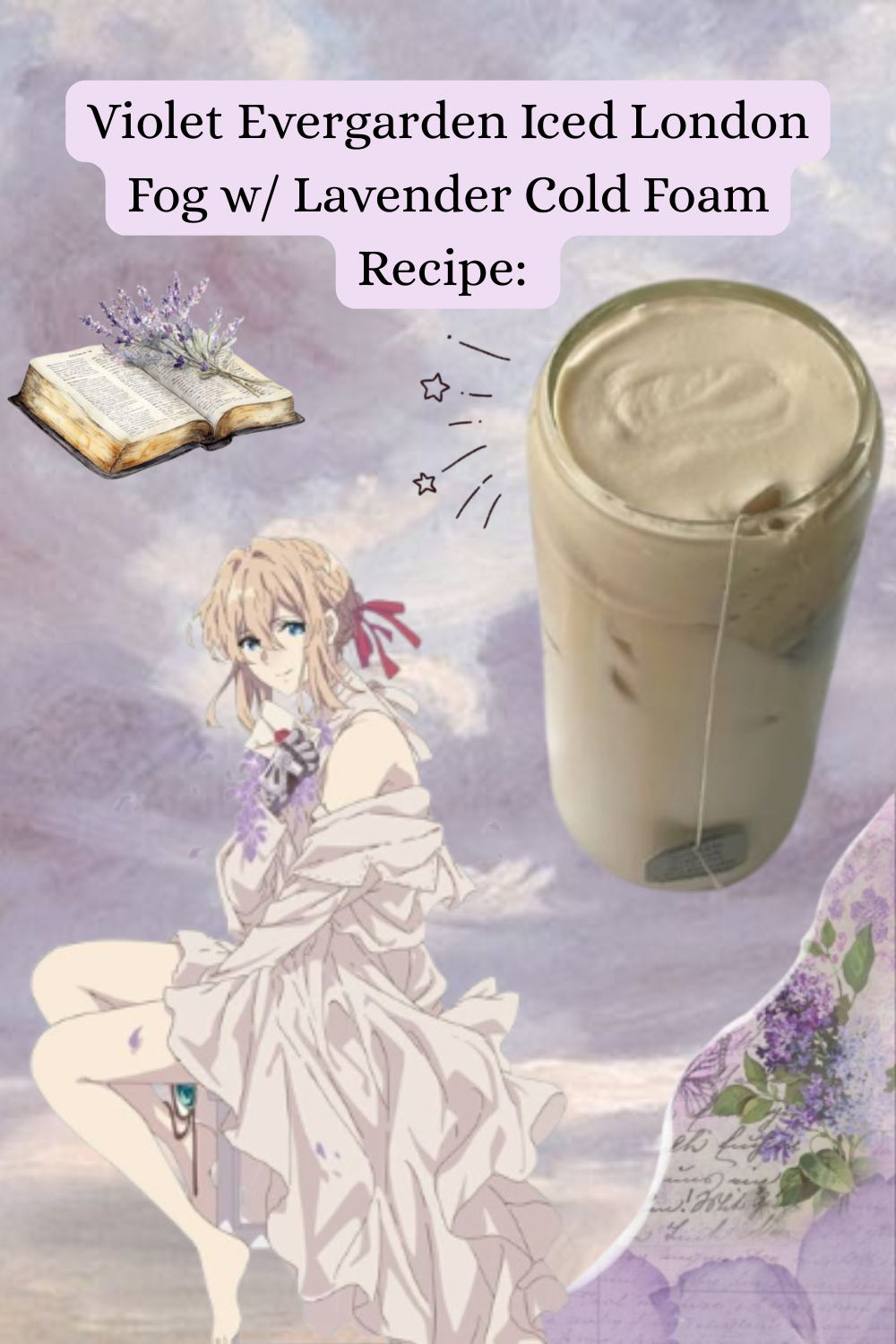
☁️💜 Iced London Fog Dream

A creamy Earl Grey latte crowned with soft lavender cold foam


🌿 Iced London Fog Latte

Ingredients

  • 1 Earl Grey tea bag (or 2 tsp loose-leaf)
  • ½ cup hot water
  • ½–¾ cup milk of choice (oat or whole are extra creamy)
  • 1–2 tsp vanilla syrup or vanilla extract + sweetener
  • Ice

Instructions

  1. Steep the Earl Grey tea in hot water for 5 minutes for a strong, fragrant base.
  2. Remove the tea bag and let the tea cool slightly.
  3. Fill a glass with ice and pour in the tea.
  4. Add vanilla and milk, then gently stir until creamy and smooth.

💜 Lavender Cold Foam

Ingredients

  • ¼ cup heavy cream or cold milk
  • 1–2 tsp lavender syrup
  • Optional: splash of vanilla

Instructions

  1. Froth the cream and lavender syrup using a handheld frother or milk frother until thick and airy.
  2. Spoon or pour the foam generously over the iced latte.

✨ Serving Tip

Finish with a light dusting of dried lavender or a swirl of foam for that café-aesthetic look.

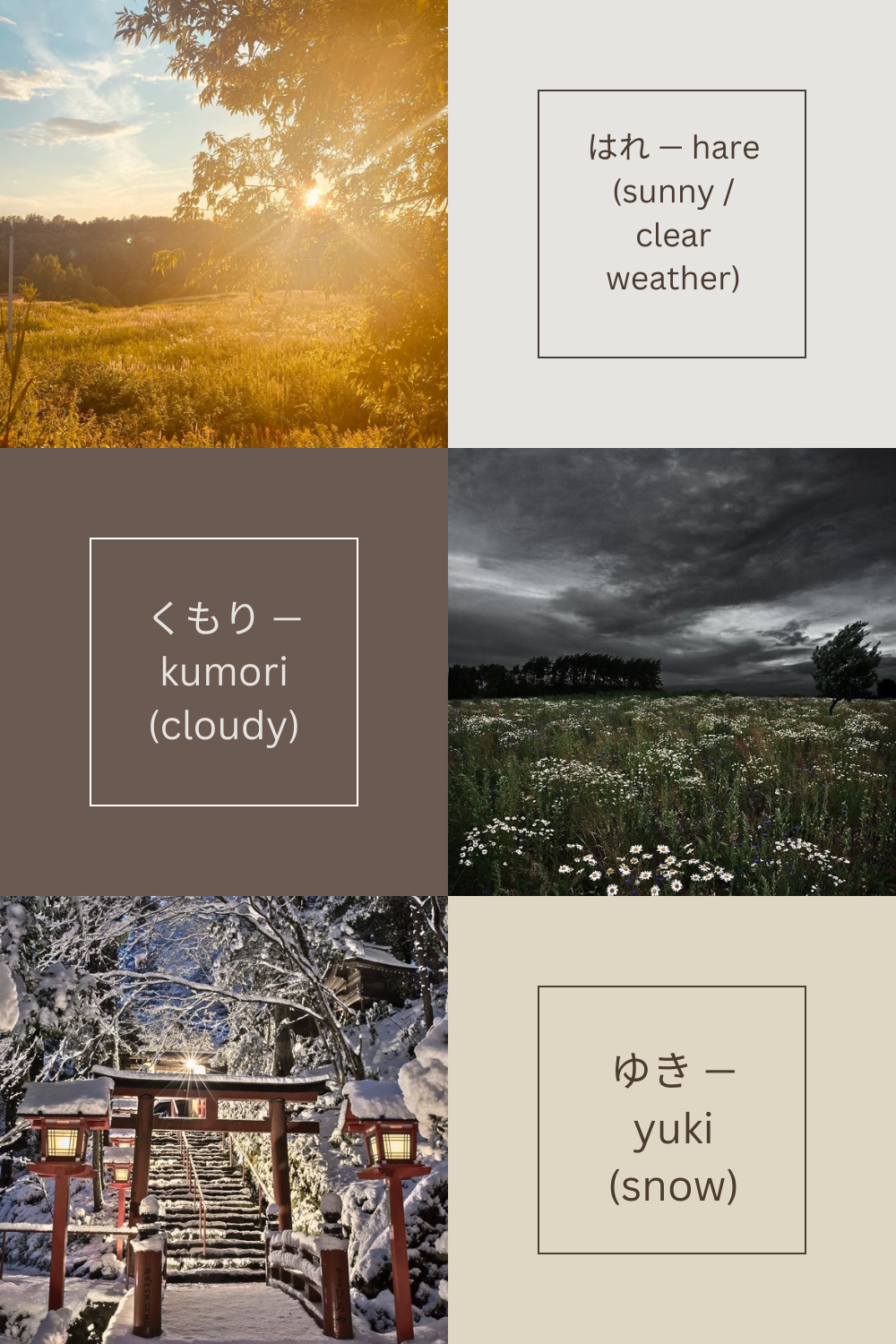
🍃 Weather Terms in Japanese You’ll Actually Use

15 soft and everyday expressions in hiragana + romaji for cozy language learning

  1. はれ — hare (sunny)
  2. くもり — kumori (cloudy)
  3. あめ — ame (rain)
  4. ゆき — yuki (snow)
  5. かぜ — kaze (wind)
  6. あつい — atsui (hot)
  7. さむい — samui (cold)
  8. すずしい — suzushii (cool, refreshing)
  9. じめじめ — jimejime (humid, muggy)
  10. むしむし — mushimushi (sticky heat / uncomfortable humidity)
  11. たいふう — taifuu (typhoon)
  12. あらし — arashi (storm)
  13. こさめ — kosame (light rain / drizzle)
  14. かいせい — kaisei (clear skies after clouds)
  15. どしゃぶり — doshaburi (downpour)

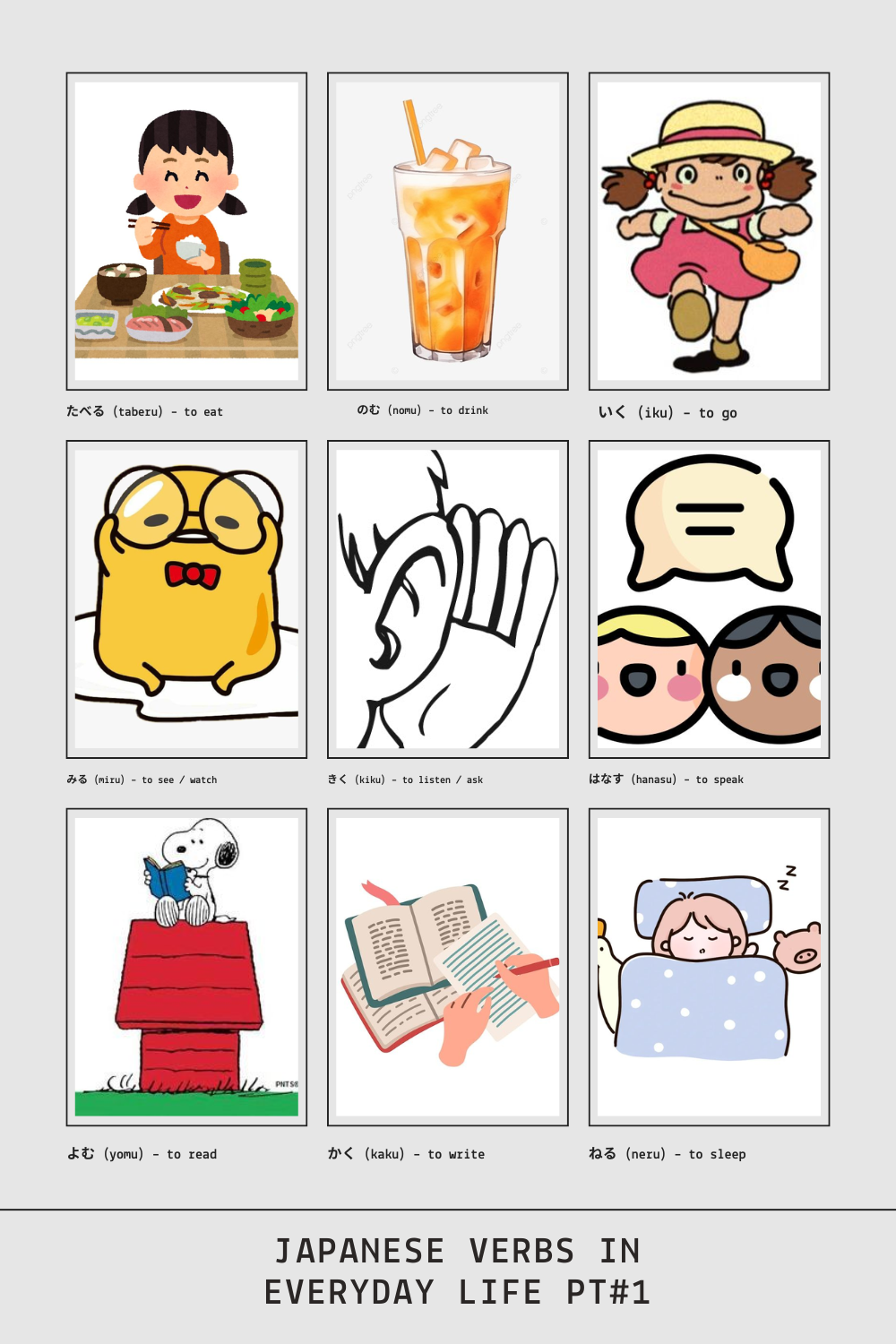
50 Everyday Japanese Verbs (with conjugations) You’ll Actually Use

  1. たべる (taberu) – to eat
  • Dictionary: たべる (taberu)
  • Masu: たべます (tabemasu)
  • Te: たべて (tabete)
  • Past: たべた (tabeta)
  • Negative: たべない (tabenai)

  1. のむ (nomu) – to drink
  • のむ (nomu)
  • のみます (nomimasu)
  • のんで (nonde)
  • のんだ (nonda)
  • のまない (nomanai)

  1. いく (iku) – to go
  • いく (iku)
  • いきます (ikimasu)
  • いって (itte)
  • いった (itta)
  • いかない (ikanai)

  1. くる (kuru) – to come
  • くる (kuru)
  • きます (kimasu)
  • きて (kite)
  • きた (kita)
  • こない (konai)

  1. する (suru) – to do
  • する (suru)
  • します (shimasu)
  • して (shite)
  • した (shita)
  • しない (shinai)

  1. みる (miru) – to see
  • みる (miru)
  • みます (mimasu)
  • みて (mite)
  • みた (mita)
  • みない (minai)

  1. きく (kiku) – to listen / ask
  • きく (kiku)
  • ききます (kikimasu)
  • きいて (kiite)
  • きいた (kiita)
  • きかない (kikanai)

  1. はなす (hanasu) – to speak
  • はなす (hanasu)
  • はなします (hanashimasu)
  • はなして (hanashite)
  • はなした (hanashita)
  • はなさない (hanasanai)

  1. よむ (yomu) – to read
  • よむ (yomu)
  • よみます (yomimasu)
  • よんで (yonde)
  • よんだ (yonda)
  • よまない (yomanai)

  1. かく (kaku) – to write
  • かく (kaku)
  • かきます (kakimasu)
  • かいて (kaite)
  • かいた (kaita)
  • かかない (kakanai)

  1. かう (kau) – to buy
  • かう (kau)
  • かいます (kaimasu)
  • かって (katte)
  • かった (katta)
  • かわない (kawanai)

  1. ねる (neru) – to sleep
  • ねる (neru)
  • ねます (nemasu)
  • ねて (nete)
  • ねた (neta)
  • ねない (nenai)

  1. おきる (okiru) – to wake up
  • おきる (okiru)
  • おきます (okimasu)
  • おきて (okite)
  • おきた (okita)
  • おきない (okinai)

  1. はたらく (hataraku) – to work
  • はたらく (hataraku)
  • はたらきます (hatarakimasu)
  • はたらいて (hatarai te)
  • はたらいた (hataraita)
  • はたらかない (hatarakanai)

  1. やすむ (yasumu) – to rest
  • やすむ (yasumu)
  • やすみます (yasumimasu)
  • やすんで (yasunde)
  • やすんだ (yasunda)
  • やすまない (yasumanai)

  1. あう (au) – to meet
  • あう (au)
  • あいます (aimasu)
  • あって (atte)
  • あった (atta)
  • あわない (awanai)

  1. でる (deru) – to leave
  • でる (deru)
  • でます (demasu)
  • でて (dete)
  • でた (deta)
  • でない (denai)

  1. かえる (kaeru) – to return
  • かえる (kaeru)
  • かえります (kaerimasu)
  • かえって (kaette)
  • かえった (kaetta)
  • かえらない (kaeranai)

  1. つかう (tsukau) – to use
  • つかう (tsukau)
  • つかいます (tsukaimasu)
  • つかって (tsukatte)
  • つかった (tsukatta)
  • つかわない (tsukawanai)

  1. つくる (tsukuru) – to make
  • つくる (tsukuru)
  • つくります (tsukurimasu)
  • つくって (tsukutte)
  • つくった (tsukutta)
  • つくらない (tsukuranai)

  1. おもう (omou) – to think
  • おもう (omou)
  • おもいます (omoimasu)
  • おもって (omotte)
  • おもった (omotta)
  • おもわない (omowanai)

  1. しる (shiru) – to know
  • しる (shiru)
  • しります (shirimasu)
  • しって (shitte)
  • しった (shitta)
  • しらない (shiranai)

  1. ある (aru) – to exist (things)
  • ある (aru)
  • あります (arimasu)
  • あって (atte)
  • あった (atta)
  • ない (nai)

  1. いる (iru) – to exist (people/animals)
  • いる (iru)
  • います (imasu)
  • いて (ite)
  • いた (ita)
  • いない (inai)

  1. もつ (motsu) – to have
  • もつ (motsu)
  • もちます (mochimasu)
  • もって (motte)
  • もった (motta)
  • もたない (motanai)

  1. つく (tsuku) – to arrive
  • つく (tsuku)
  • つきます (tsukimasu)
  • ついて (tsuite)
  • ついた (tsuita)
  • つかない (tsukanai)

  1. ならう (narau) – to learn
  • ならう (narau)
  • ならいます (naraimasu)
  • ならって (naratte)
  • ならった (naratta)
  • ならわない (narawanai)

  1. おしえる (oshieru) – to teach
  • おしえる (oshieru)
  • おしえます (oshiemasu)
  • おしえて (oshiete)
  • おしえた (oshieta)
  • おしえない (oshienai)

  1. あるく (aruku) – to walk
  • あるく (aruku)
  • あるきます (arukimasu)
  • あるいて (aruite)
  • あるいた (aruita)
  • あるかない (arukanai)

  1. わかる (wakaru) – to understand
  • わかる (wakaru)
  • わかります (wakarimasu)
  • わかって (wakatte)
  • わかった (wakatta)
  • わからない (wakaranai)

  1. すわる (suwaru) – to sit
  • すわる (suwaru)
  • すわります (suwarimasu)
  • すわって (suwatte)
  • すわった (suwatta)
  • すわらない (suwaranai)

  1. たつ (tatsu) – to stand
  • たつ (tatsu)
  • たちます (tachimasu)
  • たって (tatte)
  • たった (tatta)
  • たたない (tatanai)

  1. まつ (matsu) – to wait
  • まつ (matsu)
  • まちます (machimasu)
  • まって (matte)
  • まった (matta)
  • またない (matanai)

  1. あそぶ (asobu) – to play
  • あそぶ (asobu)
  • あそびます (asobimasu)
  • あそんで (asonde)
  • あそんだ (asonda)
  • あそばない (asobanai)

  1. はいる (hairu) – to enter
  • はいる (hairu)
  • はいります (hairimasu)
  • はいって (haitte)
  • はいった (haitta)
  • はいらない (hairanai)

  1. でかける (dekakeru) – to go out
  • でかける (dekakeru)
  • でかけます (dekakemasu)
  • でかけて (dekakete)
  • でかけた (dekaketa)
  • でかけない (dekakenai)

  1. あける (akeru) – to open
  • あける (akeru)
  • あけます (akemasu)
  • あけて (akete)
  • あけた (aketa)
  • あけない (akenai)

  1. しめる (shimeru) – to close
  • しめる (shimeru)
  • しめます (shimemasu)
  • しめて (shimete)
  • しめた (shimeta)
  • しめない (shimenai)

  1. あげる (ageru) – to give
  • あげる (ageru)
  • あげます (agemasu)
  • あげて (agete)
  • あげた (ageta)
  • あげない (agenai)

  1. もらう (morau) – to receive
  • もらう (morau)
  • もらいます (moraimasu)
  • もらって (moratte)
  • もらった (moratta)
  • もらわない (morawanai)

  1. あらう (arau) – to wash
  • あらう (arau)
  • あらいます (araimasu)
  • あらって (aratte)
  • あらった (aratta)
  • あらわない (arawanai)

  1. そうじする (souji suru) – to clean
  • そうじする (souji suru)
  • そうじします (souji shimasu)
  • そうじして (souji shite)
  • そうじした (souji shita)
  • そうじしない (souji shinai)

  1. つかれる (tsukareru) – to get tired
  • つかれる (tsukareru)
  • つかれます (tsukaremasu)
  • つかれて (tsukarete)
  • つかれた (tsukareta)
  • つかれない (tsukarenai)

  1. いそぐ (isogu) – to hurry
  • いそぐ (isogu)
  • いそぎます (isogimasu)
  • いそいで (isoide)
  • いそいだ (isoida)
  • いそがない (isoganai)

  1. なおす (naosu) – to fix
  • なおす (naosu)
  • なおします (naoshimasu)
  • なおして (naoshite)
  • なおした (naoshita)
  • なおさない (naosanai)

  1. ならぶ (narabu) – to line up
  • ならぶ (narabu)
  • ならびます (narabimasu)
  • ならんで (narande)
  • ならんだ (naranda)
  • ならばない (narabanai)

  1. けす (kesu) – to turn off
  • けす (kesu)
  • けします (keshimasu)
  • けして (keshite)
  • けした (keshita)
  • けさない (kesanai)

  1. つける (tsukeru) – to turn on
  • つける (tsukeru)
  • つけます (tsukemasu)
  • つけて (tsukete)
  • つけた (tsuketa)
  • つけない (tsukenai)

  1. できる (dekiru) – can / able to
  • できる (dekiru)
  • できます (dekimasu)
  • できて (dekite)
  • できた (dekita)
  • できない (dekinai)

  1. はしる (hashiru) – to run
  • はしる (hashiru)
  • はしります (hashirimasu)
  • はしって (hashitte)
  • はしった (hashitta)
  • はしらない (hashiranai)

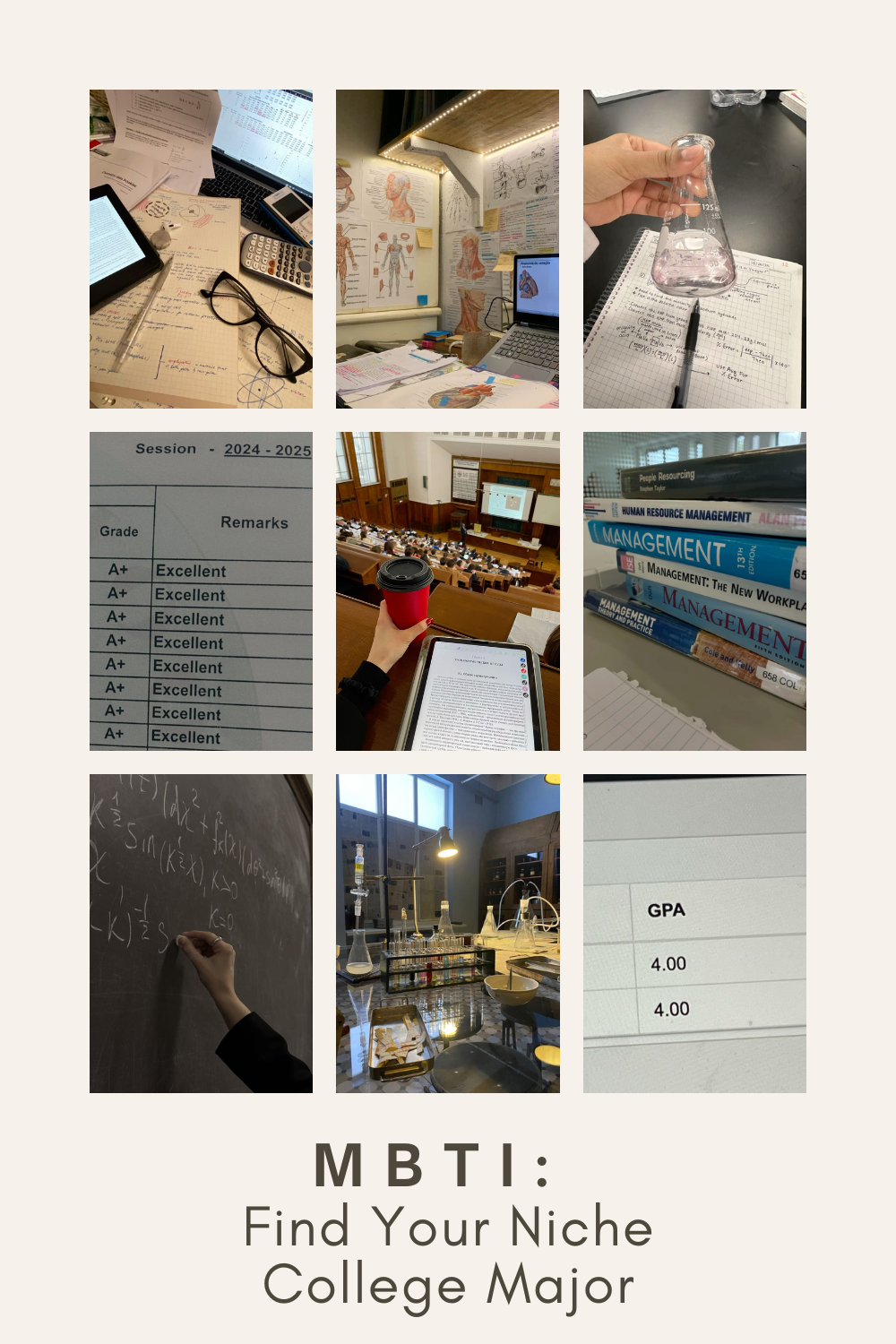
The Most Underrated College Majors for Every MBTI Type

INTJ – Strategic & Analytical

Underrated Majors:

  • Systems Engineering
  • Health Informatics
  • Operations Research

Possible Jobs with those Majors:

  • Healthcare Systems Analyst ($85k–$115k)
  • Operations Research Analyst ($90k–$125k)
  • Clinical Data Strategist ($95k–$130k)

INTP – Theoretical & Curious

Underrated Majors:

  • Cognitive Science
  • Computational Linguistics
  • Applied Mathematics

Possible Jobs with those Majors:

  • Human Factors Scientist ($85k–$120k)
  • AI Language Specialist ($95k–$140k)
  • Research Data Scientist ($90k–$130k)

ENTJ – Leadership & Vision

Underrated Majors:

  • Health Administration
  • Industrial Management
  • Organizational Leadership

Possible Jobs with those Majors:

  • Hospital Operations Manager ($90k–$130k)
  • Healthcare Consultant ($95k–$150k)
  • Director of Clinical Services ($110k–$160k)

ENTP – Innovative & Big-Picture

Underrated Majors:

  • Innovation Management
  • Entrepreneurship Studies
  • Digital Media Strategy

Possible Jobs with those Majors:

  • Product Manager ($90k–$140k)
  • Startup Consultant ($85k–$130k)
  • Brand Strategy Lead ($80k–$120k)

INFJ – Purpose-Driven & Insightful

Underrated Majors:

  • Public Health
  • Human Development
  • Rehabilitation Sciences

Possible Jobs with those Majors:

  • Community Health Program Manager ($70k–$100k)
  • Health Policy Analyst ($75k–$110k)
  • Rehabilitation Coordinator ($65k–$95k)

INFP – Creative & Values-Focused

Underrated Majors:

  • Narrative Medicine
  • Creative Writing (Health Focus)
  • Art Therapy

Possible Jobs with those Majors:

  • Medical Content Writer ($65k–$95k)
  • Art Therapist ($55k–$80k)
  • Patient Advocacy Specialist ($60k–$90k)

ENFJ – Mentor & Motivator

Underrated Majors:

  • Health Education
  • Communication Sciences
  • Nonprofit Management

Possible Jobs with those Majors:

  • Health Education Director ($70k–$105k)
  • Clinical Program Coordinator ($75k–$110k)
  • Community Outreach Manager ($65k–$95k)

ENFP – Expressive & People-Centered

Underrated Majors:

  • Behavioral Health
  • Social Innovation
  • Wellness Studies

Possible Jobs with those Majors:

  • Wellness Program Designer ($60k–$90k)
  • Behavioral Health Coordinator ($65k–$100k)
  • Corporate Wellness Consultant ($70k–$105k)

ISTJ – Reliable & Detail-Focused

Underrated Majors:

  • Health Information Management
  • Quality Assurance
  • Supply Chain Management

Possible Jobs with those Majors:

  • Healthcare Compliance Officer ($80k–$115k)
  • Clinical Quality Analyst ($75k–$110k)
  • Medical Supply Chain Manager ($85k–$125k)

ISFJ – Supportive & Practical

Underrated Majors:

  • Gerontology
  • Patient Safety
  • Medical Office Administration

Possible Jobs with those Majors:

  • Patient Safety Officer ($70k–$100k)
  • Long-Term Care Administrator ($75k–$110k)
  • Clinical Support Manager ($65k–$95k)

ESTJ – Organized & Efficient

Underrated Majors:

  • Healthcare Operations
  • Emergency Management
  • Risk Management

Possible Jobs with those Majors:

  • Emergency Management Director ($85k–$130k)
  • Hospital Operations Supervisor ($80k–$120k)
  • Risk & Compliance Manager ($90k–$135k)

ESFJ – Community-Oriented

Underrated Majors:

  • Health Services Coordination
  • Family Studies
  • Hospitality Management (Healthcare)

Possible Jobs with those Majors:

  • Patient Experience Director ($75k–$110k)
  • Clinical Services Coordinator ($70k–$100k)
  • Healthcare Hospitality Manager ($65k–$95k)

ISTP – Hands-On & Technical

Underrated Majors:

  • Biomedical Technology
  • Diagnostic Medical Sciences
  • Health Technology

Possible Jobs with those Majors:

  • Biomedical Equipment Technician ($65k–$95k)
  • Perfusionist ($120k–$160k)
  • Clinical Technology Specialist ($80k–$120k)

ISFP – Gentle & Creative

Underrated Majors:

  • Therapeutic Recreation
  • Nutrition Science
  • Integrative Health

Possible Jobs with those Majors:

  • Recreational Therapist ($55k–$80k)
  • Nutrition Program Coordinator ($60k–$90k)
  • Holistic Health Consultant ($65k–$100k)

ESTP – Action-Oriented

Underrated Majors:

  • Exercise Physiology
  • Emergency Health Services
  • Sports Medicine

Possible Jobs with those Majors:

  • Cardiac Rehab Specialist ($65k–$95k)
  • Emergency Health Administrator ($80k–$120k)
  • Sports Performance Specialist ($70k–$105k)

ESFP – Energetic & Social

Underrated Majors:

  • Health Promotion
  • Media & Health Communication
  • Event Management (Wellness)

Possible Jobs with those Majors:

  • Health Campaign Coordinator ($60k–$90k)
  • Wellness Brand Manager ($70k–$110k)
  • Community Engagement Specialist ($65k–$95k)

Your MBTI + Career Match 💼✨


ISTJ — The Logistician

Career: Forensic Document Examiner

  • Avg Salary: $65,000
  • Education: 4-year degree + specialized certification (1-2 yrs)
  • Description: Analyze handwriting, signatures, and documents for authenticity in legal cases. Ideal for detail-oriented and methodical personalities.

Career: Archival Conservator

  • Avg Salary: $55,000
  • Education: 4-year degree + master’s in library science or conservation
  • Description: Preserve historical documents, manuscripts, and artifacts using specialized techniques. Perfect for meticulous ISTJs.

ISFJ — The Nurturer

Career: Sensory Integration Therapist

  • Avg Salary: $60,000
  • Education: Master’s in Occupational Therapy (2 yrs)
  • Description: Help children with sensory processing challenges using therapeutic techniques in clinical or school settings.

Career: Herbarium Curator

  • Avg Salary: $52,000
  • Education: Bachelor’s in Botany or Biology + 1-2 yrs training
  • Description: Maintain collections of preserved plants for research and education. Great for quiet, detail-oriented caregivers.

INFJ — The Advocate

Career: Peace Corps Program Analyst

  • Avg Salary: $70,000
  • Education: Bachelor’s degree (Master’s preferred)
  • Description: Plan and evaluate international development projects with an emphasis on social impact. Fits INFJ vision and empathy.

Career: Narrative Medicine Specialist

  • Avg Salary: $65,000
  • Education: Master’s in Healthcare or Medical Humanities
  • Description: Integrate storytelling into medical practice to improve patient care and mental wellness.

INTJ — The Mastermind

Career: Urban Systems Analyst

  • Avg Salary: $95,000
  • Education: Bachelor’s in Urban Planning or Systems Engineering + optional master’s
  • Description: Use data and modeling to optimize city infrastructure and sustainability projects.

Career: Synthetic Biology Designer

  • Avg Salary: $105,000
  • Education: Bachelor’s in Bioengineering + PhD optional
  • Description: Engineer microorganisms or genetic circuits for medical or environmental applications.

ISTP — The Virtuoso

Career: Avalanche Forecaster

  • Avg Salary: $70,000
  • Education: Bachelor’s in Meteorology, Geology, or Environmental Science
  • Description: Predict avalanches and assess mountain risks for ski resorts, research, or safety.

Career: Precision Instrument Technician

  • Avg Salary: $65,000
  • Education: Associate degree + apprenticeship
  • Description: Repair and calibrate high-tech instruments for labs, medical devices, or aerospace.

ISFP — The Artist

Career: Tattoo Removal Specialist

  • Avg Salary: $55,000
  • Education: Certification + optional cosmetology background (1-2 yrs)
  • Description: Remove tattoos using laser technology while maintaining aesthetic outcomes.

Career: Ethical Fashion Consultant

  • Avg Salary: $60,000
  • Education: Bachelor’s in Fashion, Sustainability, or Design
  • Description: Advise brands and consumers on sustainable and ethical clothing practices.

INFP — The Mediator

Career: Eco-Poetry Therapist

  • Avg Salary: $50,000
  • Education: Master’s in Creative Arts Therapy or Counseling (2 yrs)
  • Description: Use poetry and nature-based interventions to support mental health and personal growth.

Career: Mythology Archivist

  • Avg Salary: $55,000
  • Education: Bachelor’s in Literature, Anthropology, or Mythology + Master’s optional
  • Description: Preserve and research folklore, myths, and storytelling traditions from cultures worldwide.

INTP — The Thinker

Career: Quantum Algorithm Developer

  • Avg Salary: $120,000
  • Education: Bachelor’s in Computer Science/Physics + PhD optional
  • Description: Develop algorithms for quantum computing applications in cryptography, optimization, or AI.

Career: Open-Source Hardware Designer

  • Avg Salary: $85,000
  • Education: Bachelor’s in Engineering
  • Description: Design hardware solutions for community-driven open-source projects.

ESTP — The Entrepreneur

Career: Stunt Coordinator

  • Avg Salary: $80,000
  • Education: Training in acting/stunts + safety certification
  • Description: Plan and execute stunts for film, TV, or live performances. Perfect for high-energy risk-takers.

Career: Adventure Tourism Consultant

  • Avg Salary: $65,000
  • Education: Bachelor’s in Tourism, Hospitality, or Outdoor Leadership
  • Description: Create safe, exciting experiences for extreme sports and adventure travel.

ESFP — The Entertainer

Career: Festival Experience Designer

  • Avg Salary: $60,000
  • Education: Bachelor’s in Event Management or Hospitality
  • Description: Craft interactive festival layouts, performances, and attendee experiences.

Career: Sensory Branding Specialist

  • Avg Salary: $70,000
  • Education: Bachelor’s in Marketing or Psychology
  • Description: Use visual, auditory, and tactile elements to create memorable brand experiences.

ENFP — The Campaigner

Career: Experiential Marketing Strategist

  • Avg Salary: $75,000
  • Education: Bachelor’s in Marketing, Communications, or Business
  • Description: Design interactive campaigns to engage audiences in unexpected ways.

Career: Digital Nomad Lifestyle Consultant

  • Avg Salary: $65,000
  • Education: Self-taught + professional experience
  • Description: Help clients transition to remote, travel-based lifestyles while staying productive.

ENTP — The Debater

Career: Futurist & Trend Analyst

  • Avg Salary: $95,000
  • Education: Bachelor’s in Business, Economics, or Social Sciences
  • Description: Predict cultural, technological, and economic trends for companies or governments.

Career: Creative Hackathon Facilitator

  • Avg Salary: $70,000
  • Education: Bachelor’s + experience in tech/innovation
  • Description: Lead innovation competitions to solve problems in fast-paced, high-energy environments.

ESTJ — The Executive

Career: Compliance & Ethics Officer (Blockchain/Tech)

  • Avg Salary: $95,000
  • Education: Bachelor’s in Law, Business, or Accounting
  • Description: Ensure companies follow regulations in emerging industries like crypto or AI.

Career: Disaster Response Coordinator

  • Avg Salary: $80,000
  • Education: Bachelor’s in Emergency Management or Public Safety
  • Description: Plan, direct, and execute disaster response and preparedness programs.

ESFJ — The Consul

Career: Community Health Program Designer

  • Avg Salary: $70,000
  • Education: Bachelor’s in Public Health or Social Work
  • Description: Develop wellness initiatives for communities with a focus on engagement and inclusion.

Career: Professional Etiquette Coach

  • Avg Salary: $65,000
  • Education: Certificate or Bachelor’s in Communications/HR
  • Description: Train clients in social, professional, and corporate etiquette.

ENFJ — The Protagonist

Career: Cross-Cultural Leadership Consultant

  • Avg Salary: $85,000
  • Education: Bachelor’s in International Relations, HR, or Leadership
  • Description: Help organizations improve leadership effectiveness in global teams.

Career: Narrative Nonprofit Strategist

  • Avg Salary: $75,000
  • Education: Bachelor’s + experience in communications/marketing
  • Description: Use storytelling to drive nonprofit missions and fundraising campaigns.

ENTJ — The Commander

Career: Space Operations Strategist

  • Avg Salary: $115,000
  • Education: Bachelor’s in Aerospace, Engineering, or Systems Management
  • Description: Plan logistics, missions, and operations for private or governmental space programs.

Career: Corporate Innovation Architect

  • Avg Salary: $110,000
  • Education: Bachelor’s + MBA optional
  • Description: Design new products, services, or business models for forward-thinking companies.

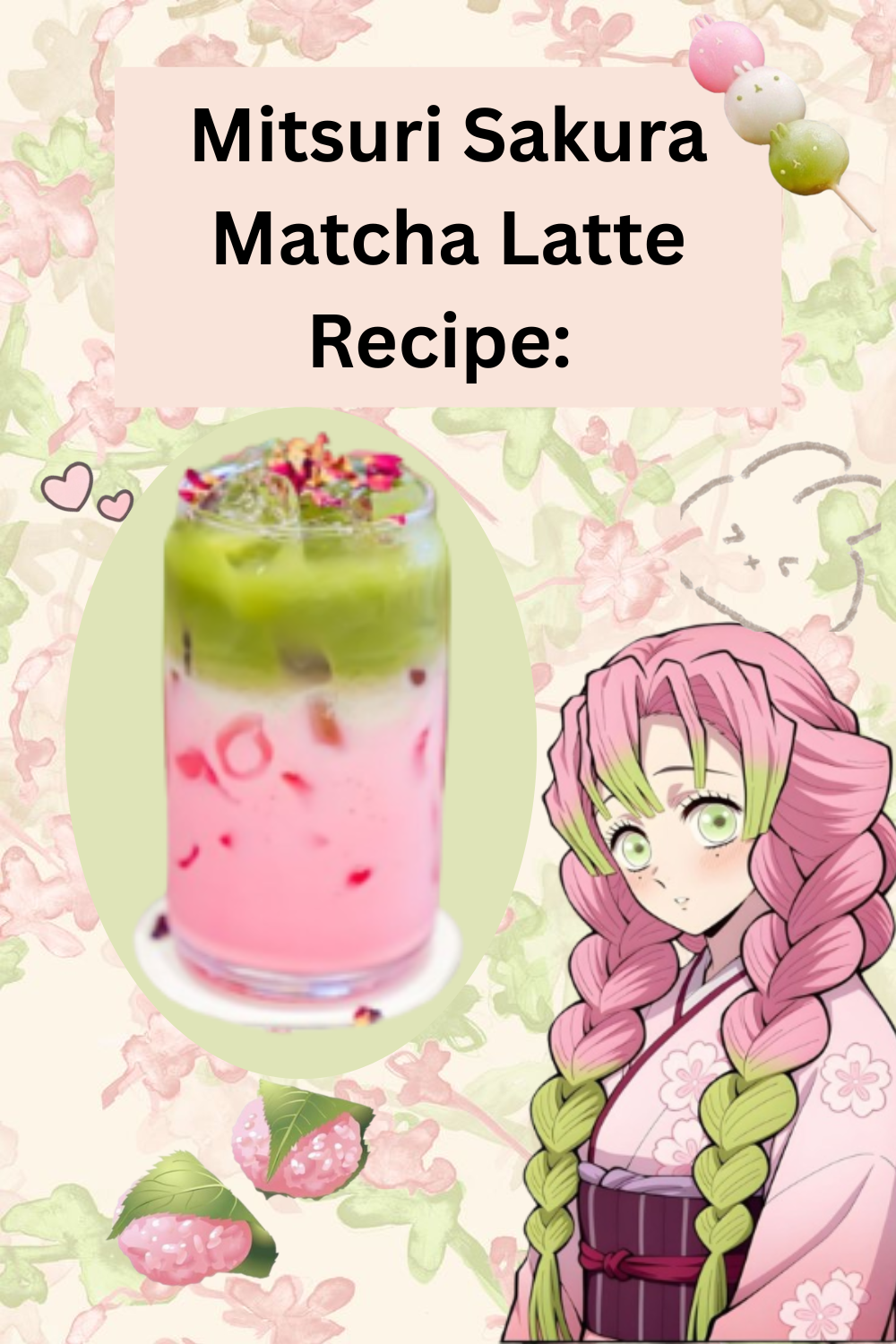
🌸Sakura Latte w/ Matcha Foam🌸

✨ Flavor Vibe

Light cherry blossom • softly sweet • creamy latte base • earthy matcha foam


🫖 Ingredients

Sakura Latte Base

  • 1 cup hot water
  • 1 tsp sakura tea or cherry blossom tea
  • ¾ cup milk (oat or almond for a softer pink tone)
  • 1–2 tsp vanilla syrup or honey
  • Optional: ½ tsp beetroot powder (for extra pink color)

Matcha Cold Foam

  • ¼ cup cold milk or oat milk
  • ½ tsp ceremonial-grade matcha powder
  • 1–2 tsp vanilla sweet cream or maple syrup

Optional Toppings

  • Dried edible sakura petals
  • Light dusting of matcha
  • Pink sugar crystals

☕ Instructions

  1. Brew the sakura tea
    Steep sakura tea in hot water for 5–7 minutes until lightly floral. Remove tea leaves or bag.
  2. Create the latte base
    Warm the milk and stir in vanilla syrup or honey. Combine with brewed sakura tea. Add beetroot powder if desired for a pastel pink hue.
  3. Make the matcha cold foam
    In a small cup or frother, whisk cold milk, matcha powder, and sweetener until thick and airy.
  4. Assemble
    Pour sakura latte into a clear glass mug. Gently layer the matcha cold foam on top.
  5. Finish & enjoy
    Garnish with sakura petals or a soft matcha dusting for a dreamy spring aesthetic.